Compared 1 week ago
Phones:
Camera Quality
Performance
Battery Life
Display Quality
The Winner Is
OnePlus 15
The OnePlus 15 is the clear choice for power users who need elite gaming performance and multi-day battery life. The Samsung Galaxy A54 is a better fit for casual users who prioritize screen quality and daylight photography at a significantly lower price point.
Winner
Product A
22 sourcesOnePlus 15
Highly Recommended
9/10
The OnePlus 15 is a performance and endurance powerhouse, defined by its massive 7,300mAh battery and the elite Snapdragon 8 Gen 5 chipset [2][3]. While the display resolution saw a slight downgrade to 1.5K, the 165Hz refresh rate ensures it remains one of the fluidest screens on the market [1][15]. The camera system is highly versatile and capable of 4K/120fps video, though it faces stiff competition from 'Ultra' flagships in low-light realism [2][4].
Top Pros
The Snapdragon 8 Elite Gen 5 chipset delivers exceptional sustained gaming performance, outscoring many Android rivals in synthetic benchmarks [2][11].
A massive 7,300mAh silicon-carbon battery provides class-leading endurance, lasting over 45 hours in standardized video looping tests [3][15].
The 6.78-inch LTPO AMOLED display features a high 165Hz refresh rate and a 3200Hz touch sampling rate for exceptionally fluid animations and gaming [1][15].
Top Cons
The display resolution has been reduced to 1.5K (2772x1272) compared to the 2K panels found on previous OnePlus flagships [1][3].
Low-light camera performance, while solid, is noted by experts to lack the realism found in competitors like Apple and Vivo [2][4].
Peak outdoor brightness is limited to 1800 nits, which falls behind rivals like the iPhone 17 Pro [3][15].
Common Issues Reported
Some users have reported that the camera occasionally misses focus or produces softer images when zooming in significantly [2][4].
While thermal management is generally improved, some users noted that video quality can be less smooth compared to top-tier competitors [19][20].

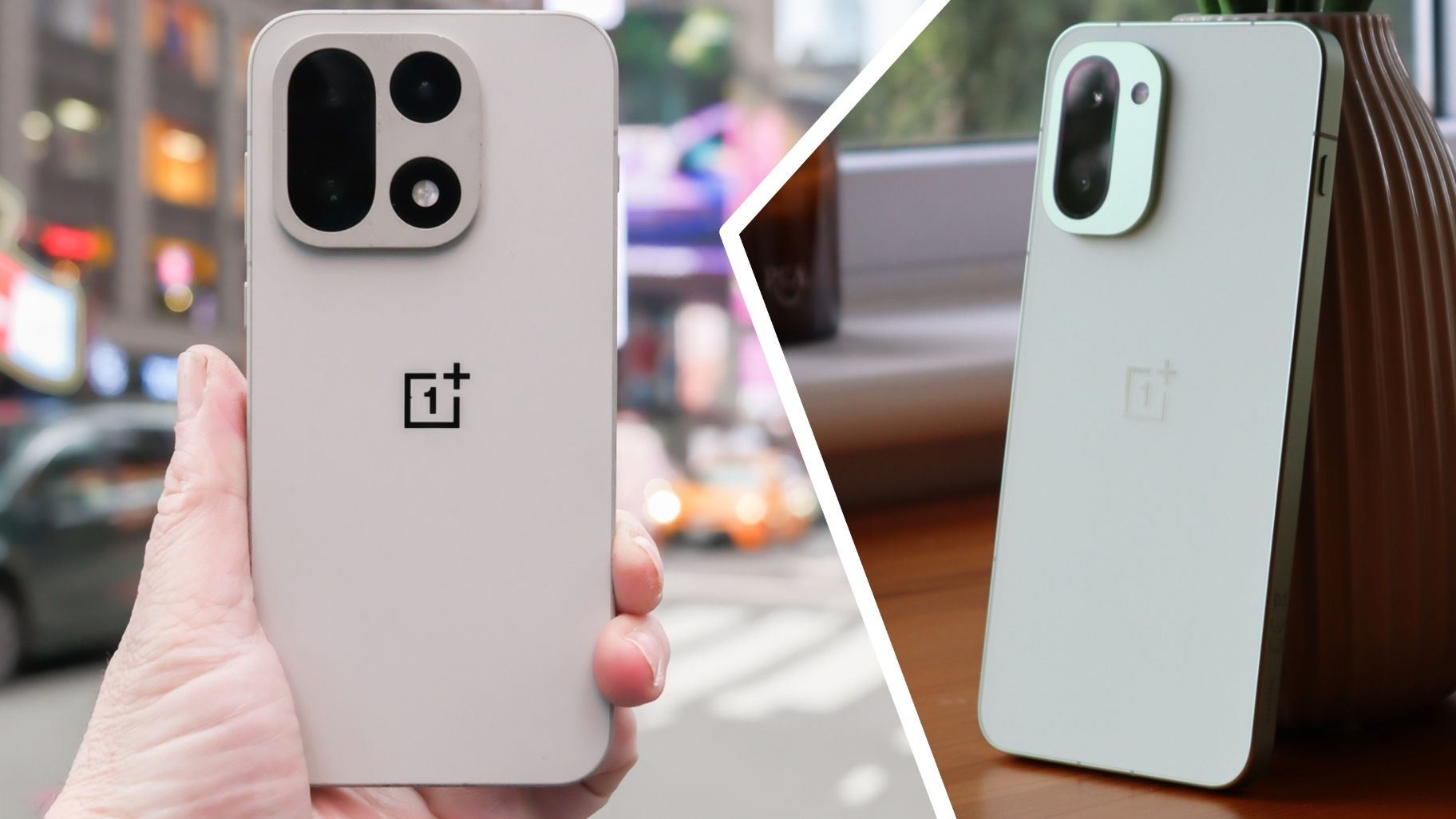


Product B
21 sourcesSamsung Galaxy A54
Recommended
8/10
The Samsung Galaxy A54 is a top-tier mid-range contender primarily due to its flagship-grade Super AMOLED display and a highly capable 50MP main camera that excels in daylight and video [1][6][17]. While its battery life is initially excellent, the 25W charging is relatively slow, and the Exynos 1380 chipset limits its appeal for hardcore gamers due to thermal throttling [7][14]. Overall, it offers a premium viewing and photography experience for users who prioritize display quality and social media over high-end gaming performance [6][10].
Top Pros
The 50MP main camera with Optical Image Stabilization (OIS) delivers sharp, colorful, and balanced photos in daylight, rivaling more expensive models [1][6][10].
The 6.4-inch Super AMOLED display features a 120Hz refresh rate and a peak brightness of 1,000 nits, ensuring excellent outdoor visibility and smooth animations [4][6][17].
Both the front 32MP camera and the rear main sensor support 4K video recording at 30fps, which is a rare and highly valued feature in the mid-range segment [1][8][15].
Top Cons
The Exynos 1380 chipset is not optimized for demanding applications, struggling significantly with heavy gaming like Genshin Impact even on low settings [7][14][19].
Charging speeds are limited to 25W, requiring approximately 80 minutes for a full charge, which is slower than many competitors in the same price bracket [6][17].
The device lacks wireless charging capabilities, a feature increasingly found in other mid-range and flagship-adjacent smartphones [6][10].
Common Issues Reported
Users have reported significant battery life degradation over time, with some experiencing a drop to 4-5 hours of screen-on-time after a few years of use [7][18][21].
Frequent micro-stutters and UI lag have been noted by users during multitasking or when the device begins to heat up [14][19].



Head-to-Head
Camera Quality
OnePlus 15
Good
Good
OnePlus 15 wins due to its 3.5x periscope zoom and 4K/120fps video capability, though the Galaxy A54 punches above its weight with excellent daylight color and 4K support on both sides.
Performance
OnePlus 15
Excellent
Poor
The Snapdragon 8 Gen 5 in the OnePlus 15 is a gaming powerhouse, while the Galaxy A54's Exynos 1380 struggles with heavy apps, thermal throttling, and UI micro-stutters.
Battery Life
OnePlus 15
Excellent
Good
OnePlus 15 features a massive 7,300mAh battery with 120W charging (under 50 mins), vastly outperforming the Galaxy A54's 5,000mAh cell and slow 25W charging.
Display Quality
OnePlus 15
Excellent
Good
OnePlus 15 offers a superior 165Hz refresh rate and higher peak brightness (1800 nits), though the Galaxy A54 remains very competitive with its vibrant Super AMOLED 120Hz panel.
Overall Assessment
Features
Product A wins
The OnePlus 15 offers a more advanced 165Hz LTPO display and a versatile triple 50MP camera system with periscope zoom, whereas the Galaxy A54 is limited by a 120Hz screen and a less useful macro lens.
Fewer Problems
Product A wins
The OnePlus 15 has minor software-related camera focus issues, while the Galaxy A54 suffers from more severe hardware limitations including thermal throttling, UI lag, and significant battery degradation over time.
Better Value
Product B wins
As a mid-range device, the Galaxy A54 provides a flagship-grade display and strong main camera performance for a fraction of the price of a high-end flagship like the OnePlus 15.
Compared 2 weeks ago
Electric dirt bikes:
Range
Performance
Suspension
Price
The Winner Is
X7 Spark
The X7 Spark is the better choice for riders prioritizing raw power and range per dollar, provided they can overlook potential quality control risks. The Shadow Strike 72v is recommended for those who value proven Fast Ace suspension components and more predictable performance.
Product A
13 sourcesShadow Strike 72v
Recommended
8/10
The Shadow Strike 72v (SV2) is a high-performance electric dirt bike that excels in power delivery and suspension quality for its price bracket. While it offers a competitive 55 mph top speed and motocross-grade Fast Ace components, users must contend with a basic display and potential out-of-the-box shock issues [1][12]. Overall, it represents excellent value for riders seeking 72V power without the premium price tag of boutique brands [12].
Top Pros
The 72V 7000W peak brushless motor delivers exceptional performance, reaching top speeds of 50-55 mph depending on rider weight [1][3][12].
Equipped with premium Fast Ace hydraulic front forks and a rear shock, the suspension is designed to handle aggressive off-road jumps and rough terrain [1][2][4].
The 72V 25Ah Samsung lithium-ion battery provides a respectable real-world range of 30-40 miles, depending on riding style and terrain [1][3][12].
Top Cons
The stock display only shows battery bars rather than precise voltage, making it difficult for riders to accurately gauge remaining range without a separate meter [12].
While the Fast Ace suspension is generally high-quality, some expert reviewers have noted it can feel 'notchy' compared to more expensive, smoother professional systems [1].
The real-world range drops significantly to around 30 miles when the bike is pushed to its performance limits in aggressive dirt riding scenarios [12].
Common Issues Reported
There have been documented cases of the rear shock leaking fluid immediately out of the box, requiring a full replacement after only 100 miles [12].
The battery monitoring system is imprecise, forcing riders to manually track voltage levels (84V full to 64V empty) to avoid being stranded [12].
Winner
Product B
11 sourcesX7 Spark
Recommended
8/10
The Qronge X7 Spark stands out as a high-performance electric dirt bike that offers an industry-leading 12,000W motor and 72V 50Ah battery at a highly competitive sub-$3,000 price point [10][11]. While its raw specs for range and speed are exceptional for the cost, potential buyers should be wary of aggressive power delivery and historical tendencies for the brand to overstate top speeds [1][2]. Overall, it represents a high-value, high-risk investment for experienced riders looking for maximum power per dollar [5].
Top Pros
The X7 Spark offers a massive 12,000W peak motor that delivers a claimed top speed of 70 mph, making it one of the fastest options in its price bracket [3][10].
Equipped with a high-capacity 72V 50Ah battery, the bike boasts an impressive maximum range of up to 120 miles on a single charge [10].
The motor produces a substantial 600 Nm of torque, providing the raw power necessary for challenging off-road terrain and steep hill climbs [10].
Top Cons
There is significant skepticism regarding the accuracy of the 70 mph top speed, as previous Qronge models have been found to run 7-8 mph slower than advertised [1].
The 120-mile range claim is likely based on ideal conditions and may be difficult to achieve during high-performance off-road riding [10].
While the X1 Spark features inverted forks and air spring shocks, specific long-term suspension durability for the more powerful X7 Spark remains unverified due to its recent release [1][10].
Common Issues Reported
Users have reported that Qronge speedometers and battery meters can be unreliable, leading to inaccurate performance data during rides [1].
There are widespread reports of poor shipping quality control, with bikes arriving with damaged components or missing parts [1].
Head-to-Head
Range
X7 Spark
Average
Excellent
The X7 Spark features a massive 50Ah battery with a claimed 120-mile range, dwarfing the 25Ah battery and 30-40 mile real-world range of the Shadow Strike 72v.
Performance
X7 Spark
Good
Excellent
The X7 Spark's 12,000W motor and 70 mph top speed significantly outperform the 7,000W motor and 55 mph top speed of the Shadow Strike 72v.
Suspension
Shadow Strike 72v
Good
Average
The Shadow Strike 72v uses name-brand Fast Ace hydraulic components, which are generally superior to the unverified air spring system on the X7 Spark.
Price
X7 Spark
Good
Excellent
The X7 Spark is priced approximately $300 lower than the Shadow Strike 72v while offering higher technical specifications across the board.
Overall Assessment
Features
Product B wins
The X7 Spark offers a significantly larger 50Ah battery and a more powerful 12,000W motor compared to the 25Ah battery and 7,000W motor on the Shadow Strike.
Fewer Problems
Product A wins
The Shadow Strike 72v has more credible build quality despite some shock issues, whereas the X7 Spark suffers from unreliable meters, shipping damage, and questionable marketing accuracy.
Better Value
Product B wins
At a lower price point of $2,599, the X7 Spark provides nearly double the battery capacity and motor output of the Shadow Strike 72v.
Compared 1 month ago
Electric scooters:
Range
Motor Power
Top Speed
Suspension
The Winner Is
It's a Tie!
This comparison focused on specific performance aspects where both scooters excel in different areas. Choose the Juicease LP10 if you prioritize ride comfort on bumpy roads and raw motor power, but opt for the Xiaomi Mi 2 Pro if you require better real-world range and a more established, reliable platform for smooth city commuting.
Product A
12 sourcesJuicease LP10 Electric Scooter
Worth Considering
7/10
The Juicease LP10 stands out in the budget category primarily due to its dual suspension system and 1000W peak motor power, which provide a more comfortable and capable ride than many of its price-point competitors [1][2]. However, its real-world range of 20 km is disappointing compared to its 35 km claim, and the solid tires compromise some of the suspension's benefits by transmitting vibrations to the frame [1][3]. Overall, it is a strong value proposition for short-distance commuters looking for basic shock absorption at a very low price [1].
Top Pros
The scooter features a dual suspension system with both front and rear shock absorption, which is a rare and significant advantage for a budget-tier device [1][2].
The motor provides a respectable 500W nominal and 1000W peak power output, offering decent acceleration from a standstill compared to other entry-level models [1][5].
It achieves a competitive top speed of approximately 30-35 km/h (21.7 mph) in real-world testing, outperforming many regional speed-limited competitors [1][2].
Top Cons
The real-world range is significantly lower than advertised, achieving only about 20 km (12.4 miles) compared to the manufacturer's 35 km claim [1][2].
While the motor has high peak power, it is reported to struggle with steep inclines compared to more premium commuter scooters [2][3].
The use of solid 10-inch tires transmits more shock and vibration to the frame than pneumatic tires, which can lead to long-term durability issues like cracked welds [1][3].
Common Issues Reported
There is a significant discrepancy between the advertised 35 km range and the actual 20 km range observed in testing with 15% battery remaining [1][2].
Users have expressed concerns regarding the long-term durability of the frame and suspension components due to the use of lower-quality metals often found in budget AliExpress models [3].
Product B
20 sourcesXiaomi Mi 2 Pro
Worth Considering
7/10
The Xiaomi Mi Pro 2 is a highly capable urban commuter defined by its impressive 45 km theoretical range and a powerful 600W peak motor that handles hills with ease [1][3]. However, its primary weakness is the complete absence of a dedicated suspension system, making it less suitable for anything other than smooth pavement [5][17]. While it offers excellent value and reliable speed for its class, riders on rougher roads may find the vibration dampening of the 8.5-inch tires insufficient [8][13].
Top Pros
The scooter features a high-capacity 12.8Ah lithium-ion battery that provides a maximum claimed range of 45 km (28 miles), which is considered a leading specification in its price category [3][4][17].
Equipped with a 300W rated motor that reaches a peak power output of 600W, the device offers sufficient torque to handle inclines of up to 20% [3][17].
The motor performance is consistently praised by experts for offering 'serious bang for your buck' and providing stable power delivery for urban commuting [1][2].
Top Cons
The scooter lacks any built-in mechanical suspension system, which results in a harsh and bumpy ride when traveling over uneven surfaces or cobblestones [1][5][17].
Real-world range testing often falls significantly short of the 45 km claim, with users reporting actual distances closer to 20-30 km when using Sport mode or carrying heavier loads [8][12].
The official top speed is electronically limited to 25 km/h (15.5 mph) to meet international regulations, which may feel slow compared to newer competitors in the same class [17][18].
Common Issues Reported
Users frequently report that the lack of suspension leads to physical discomfort on rough terrain, often necessitating expensive third-party aftermarket upgrades like Monorim kits [8][13].
The advertised 45 km range is highly optimistic and is typically only achievable under perfect conditions with a lightweight rider in the lowest power mode [4][8].
Head-to-Head
Range
Xiaomi Mi 2 Pro
Poor
Good
Product B has a larger 12.8Ah battery and a higher theoretical range (45km vs 35km). Even with real-world drops, Product B typically achieves 20-30km, whereas Product A struggles to reach 20km.
Motor Power
Juicease LP10 Electric Scooter
Excellent
Good
Product A features a 1000W peak motor, significantly outperforming Product B's 600W peak output, leading to better acceleration from a standstill.
Top Speed
Juicease LP10 Electric Scooter
Good
Average
Product A reaches 30-35 km/h out of the box, whereas Product B is electronically capped at 25 km/h unless the user applies unofficial firmware modifications.
Suspension
Juicease LP10 Electric Scooter
Excellent
Poor
Product A features a dedicated dual suspension system (front and rear) which is rare for its class. Product B has no mechanical suspension, relying solely on its tires for dampening.
Overall Assessment
Features
Product A wins
Product A offers a much more advanced mechanical suspension system and higher peak motor power, whereas Product B relies on air-filled tires and a larger battery capacity for its feature set.
Fewer Problems
Product B wins
Product B has fewer structural concerns; Product A's solid tires combined with budget metal construction lead to worries about long-term frame durability and cracked welds.
Better Value
Tie
Product A offers better raw hardware (suspension/power) for the price, while Product B offers a more reliable brand ecosystem and better range potential.
Compared 1 month ago
Electric scooters:
Range
Top Speed
Build Quality
Suspension
The Winner Is
Mankeel MK085
The Mankeel MK085 is the superior choice for commuters as it includes a necessary suspension system to offset the harshness of solid tires. The Aovopro ES80 is difficult to recommend due to its significant build quality issues and lack of vibration dampening.
Product A
16 sourcesAovopro ES80
Not Recommended
5/10
The Aovopro ES80 is a budget-oriented Xiaomi clone that offers decent portability and puncture-proof tires but suffers from significant performance gaps and poor ride comfort [1][16]. While advertised with a 19 mph top speed and 21+ mile range, real-world testing consistently shows lower performance and a harsh ride due to the total lack of suspension [1][2]. Given the widespread reports of failing kickstands and electronic errors, it is often viewed as a lower-quality alternative to established brands [1][15].
Top Pros
The 350W motor provides quick acceleration for a budget-friendly commuter scooter [8].
The 8.5-inch solid tires are completely puncture-proof, eliminating the risk of flats during daily commutes [1][9].
The scooter features a streamlined design and durable materials that some reviewers consider a solid choice for casual riders [2].
Top Cons
Real-world top speed often peaks at 15-16 mph, failing to reach the advertised 19 mph (31 km/h) in testing [1][2].
The actual range of 12-16 miles falls significantly short of the manufacturer's 21-25 mile claims [1][2].
The solid tires offer zero suspension, making every sidewalk crack feel like a 'chiropractic adjustment' [1].
Common Issues Reported
Frequent reports of the kickstand snapping off shortly after purchase due to poor material quality [1][3].
The computer system is known to lock up or freeze via Bluetooth, requiring a full battery drain to reset [3].
Winner
Product B
12 sourcesMankeel MK085
Worth Considering
7/10
The Mankeel MK085 is a solid mid-range commuter that excels in durability due to its puncture-proof honeycomb tires and IP68-rated battery protection [1][3]. While its 22 mph top speed and 22-mile range are competitive on paper, real-world performance is often more modest, particularly regarding comfort on bumpy roads [1][11]. Overall, it offers a strong value proposition for urban riders who prioritize low maintenance and a functional suspension system over high-speed performance [1][8].
Top Pros
The scooter features a dual shock absorption system designed to dampen vibrations on uneven city streets, providing a smoother ride than rigid-frame competitors [1][3].
Its 10-inch honeycomb solid tires are maintenance-free and puncture-proof, ensuring long-term durability without the risk of flats during commutes [1][10].
The build quality utilizes a lightweight aluminum alloy frame that supports a maximum load of 265 lbs while remaining portable enough to fit in a car trunk [2][10].
Top Cons
The solid honeycomb tires, while durable, can make road bumps feel more pronounced and jarring for the rider compared to pneumatic tires [1][11].
Real-world range often falls short of the advertised 22 miles, with users reporting closer to 15-19 miles depending on hills, wind, and rider weight [1][3].
The speedometer is reported to be inaccurate at higher speeds, often capping its display at 19 mph even when the scooter is capable of going faster [1].
Common Issues Reported
Users have reported that the speedometer display may require a manual 'unlock' via the smartphone app to show speeds above 19 mph [1].
The ride quality can be stiff on rougher pavement because the suspension must compensate for the lack of air cushioning in the solid tires [1][11].
Head-to-Head
Range
Mankeel MK085
Poor
Average
Product B achieves a real-world range of 15-19 miles, outperforming Product A's 12-16 mile range despite both having similar motor specs.
Top Speed
Mankeel MK085
Poor
Good
Product B can reach up to 22 mph, while Product A struggles to reach its advertised 19 mph, often peaking at only 15-16 mph in testing.
Build Quality
Mankeel MK085
Poor
Good
Product A has reported failures in kickstands, bolts, and electronics; Product B features an IP68-rated battery and a more durable aluminum alloy frame.
Suspension
Mankeel MK085
Poor
Average
Product B includes a dual shock absorption system to mitigate road vibrations, while Product A has no suspension, leading to a very harsh ride on solid tires.
Overall Assessment
Features
Product B wins
The Mankeel MK085 offers a higher potential top speed and a functional dual shock absorption system, whereas the Aovopro ES80 lacks suspension entirely.
Fewer Problems
Product B wins
The Mankeel MK085 has fewer critical hardware failures compared to the Aovopro ES80, which suffers from snapping kickstands, loose handlebar bolts, and electronic system freezes.
Better Value
Product B wins
With a higher real-world range and better ride comfort for a similar budget price point, the Mankeel MK085 provides a more reliable and usable package.
Compared 1 month ago
Electric scooters:
Range
Motor Power
Suspension
Build Quality
The Winner Is
Mankeel MK085
The Mankeel MK085 is the better choice for riders prioritizing comfort and motor power due to its dual suspension and 350W motor. However, if long-term brand reliability and local support are your primary concerns, the Ninebot E25E is a safer, albeit less powerful, investment.
Product A
11 sourcesNinebot E25E
Worth Considering
7/10
The Ninebot E25E is a well-built urban commuter praised for its durable aviation-grade aluminum frame and innovative puncture-proof tires [3][4]. While its 300W motor and front suspension provide a smooth experience on flat pavement, the scooter struggles with steep hills and lacks the rear dampening needed for rougher terrain [2][6]. It is a solid choice for short commutes, especially if the optional battery is added to resolve inherent range limitations [1][3].
Top Pros
The 300W motor (700W peak) provides a consistent top speed of 25 kph (15.5 mph) and handles urban inclines up to 15% with smooth acceleration [3][11].
The aviation-grade aluminum alloy frame offers a high-quality, polished aesthetic that supports a maximum rider weight of 100 kg (220 lbs) [3][4].
The 9-inch 'flat-free' foam-filled tires are completely puncture-proof and designed to simulate the comfort of pneumatic tires at 40 psi without the maintenance [2][3].
Top Cons
Real-world range often falls significantly short of the advertised 25 km, with some users reporting as little as 9-10 km in cold weather or hilly terrain [6][9].
The 300W motor struggles to maintain top speed on steeper inclines once the battery level drops below 50%, particularly for heavier riders [6][8].
The suspension system is limited to the front wheel only, which results in a rough and jarring ride when navigating curbs or very uneven pavement [2][7].
Common Issues Reported
Users have reported structural durability issues including the rear fender rattling or snapping off after only a few rides [6].
The front wheel joint has been known to develop a significant wobble or 'play' after several months of regular use [6].
Winner
Product B
12 sourcesMankeel MK085
Worth Considering
7/10
The Mankeel MK085 is a strong mid-range contender that stands out primarily due to its dual suspension system, which offers superior comfort over many similarly priced urban scooters [6][11]. While its 350W motor and 19-22 mile range are adequate for city use, real-world range significantly decreases at high speeds, and the brand's long-term reliability and support remain a concern for some users [3][6]. Overall, it offers excellent value for commuters prioritizing portability and ride smoothness at a sub-$400 price point [12].
Top Pros
The dual shock absorption system, featuring both front and rear suspension, is frequently cited as a game-changer for urban comfort compared to entry-level competitors [6][11].
The 350W motor provides a balanced performance profile, allowing for a top speed of up to 22 mph and a 15% climbing slope capability [7][11].
The 36V 10.4Ah lithium battery offers a competitive maximum range of 19 to 22 miles, which is well-suited for standard daily urban commutes [7][11].
Top Cons
Real-world range performance often drops to 12-14 miles when riding at the maximum speed of 19 mph, falling short of the advertised 19-22 mile maximum [6].
The 350W motor is considered mid-range and may struggle compared to 500W or 1000W motors found in higher-end commuter scooters [6][9].
While the suspension is praised, the use of solid tires can still result in a more unforgiving ride on extremely rough terrain compared to pneumatic tires [6].
Common Issues Reported
Users have reported instances of battery failure after exposure to water, despite the advertised waterproof ratings [5].
There are documented reports of poor build quality in specific components, such as missing front brake mounts and fragile disc brake assemblies [5].
Head-to-Head
Range
Mankeel MK085
Average
Good
The Mankeel offers a higher base range of 19-22 miles compared to the Ninebot's 15.5 miles. While both fall short in real-world tests, the Mankeel starts with a larger capacity battery.
Motor Power
Mankeel MK085
Average
Good
The Mankeel's 350W motor provides a higher top speed (22 mph) compared to the Ninebot's 300W motor (15.5 mph), which is noted to struggle when the battery drops below 50%.
Suspension
Mankeel MK085
Average
Excellent
Mankeel features a dual shock absorption system (front and rear), whereas the Ninebot only has front suspension, leading to a jarring ride on uneven pavement.
Build Quality
Ninebot E25E
Good
Average
The Ninebot uses premium aviation-grade aluminum and has a more established reputation, while the Mankeel has reports of missing brake mounts and fragile components.
Overall Assessment
Features
Product B wins
The Mankeel MK085 offers a more complete feature set including a more powerful 350W motor and a dual suspension system compared to the Ninebot's front-only setup.
Fewer Problems
Product A wins
Ninebot E25E wins here because its issues are primarily structural wear (rattles/wobbles), whereas the Mankeel faces more severe risks like battery failure after water exposure and counterfeit seller issues.
Better Value
Product B wins
The Mankeel provides better out-of-the-box performance and dual suspension for a competitive price, while the Ninebot requires an expensive external battery to match its range.
Compared 1 month ago
Phones:
Camera Quality
The Winner Is
Vivo X200 Pro Mini
If you require the absolute best zoom capabilities on the market, the Vivo X200 Pro (A) is technically superior but comes with a major risk of lens flare. For most users, the Vivo X200 Pro Mini (B) is the better choice as it offers a more consistent, high-quality flagship camera experience in a compact form factor.
Product A
13 sourcesVivo X200 Pro
Worth Considering
7/10
The Vivo X200 Pro excels with its ZEISS-backed camera system, particularly the 200MP telephoto lens, which offers exceptional zoom capabilities and detailed portraits, often outperforming competitors [1]. The 50MP main camera also delivers strong image quality and versatile manual controls, while video recording is highly capable across all rear cameras [1]. However, significant lens flare issues with the main camera and some inconsistencies in selfie camera performance and high-zoom focusing detract from an otherwise impressive camera experience [1]. Despite these drawbacks, its telephoto prowess makes it a strong contender for users prioritizing zoom quality.
Top Pros
The 200MP ZEISS APO telephoto camera is considered the "best zoom camera we've ever used on a smartphone" and a "telephoto for the ages," excelling at capturing detailed portraits at 3.7x (85mm) and 5.9x (135mm) [1]
The telephoto lens outperforms competitors like the iPhone 16 Pro and OnePlus 13 in terms of noise and blur at similar zoom distances, delivering sharp shots with depth even at 10x zoom [1]
The primary 50MP camera, co-developed with Sony, features a 1/1.28-inch LYT-818 sensor and an f/1.6 lens with OIS, providing strong image quality with good detail and consistent performance [1]
Top Cons
The main camera suffers from significant lens flare problems, with numerous users reporting "massive lens flare problems" and "unsightly glare" when shooting at a somewhat perpendicular angle to the sun [1]
Vivo has acknowledged the lens flare issue, attributing it to the larger f/1.57 aperture of the main camera and coating technology, making it more pronounced than on previous Vivo X-series phones [1]
While the ultra-wide camera is generally good, some reviewers desired a slightly wider field of view, especially for video recording, as Electronic Image Stabilization (EIS) tightens the framing [1]
Common Issues Reported
Numerous early users and reviewers have reported "massive lens flare problems" and "unsightly glare" when using the 1x main camera, particularly when shooting at a somewhat perpendicular angle to the sun [1]
Some users have experienced issues with focusing after 10x zoom and observed noticeable color differences between 2x and 10x zoom, suggesting potential inconsistencies or processing artifacts [1]
Winner
Product B
13 sourcesVivo X200 Pro Mini
Highly Recommended
9/10
The Vivo X200 Pro Mini offers a best-in-class camera system for the compact smartphone category, anchored by a high-performance 50MP Sony LYT-818 main sensor and ZEISS optics [1][6]. While it excels in low-light detail and macro photography, it suffers from aggressive skin-smoothing algorithms and a mediocre fixed-focus selfie camera [1][13]. Overall, it is a top-tier choice for mobile photographers who prioritize rear-camera versatility and color accuracy in a smaller form factor [1][5].
Top Pros
The 50MP main camera utilizes a large 1/1.28-inch Sony LYT-818 sensor with an f/1.57 aperture, delivering flagship-level detail and dynamic range that rivals one-inch sensor models [1][6].
The 50MP telephoto lens provides a versatile 3x optical zoom (70mm equivalent) with OIS, maintaining high image quality and crispness even at digital zoom levels up to 10x [1][5].
Low-light performance is exceptional, with the imaging algorithm capturing more detail and exposure in dark areas than competitors like the iPhone 16 Pro [1][13].
Top Cons
The 32MP front-facing camera lacks autofocus and is frequently described as 'mid-tier,' resulting in soft images and a loss of detail in low-light scenarios [1][13].
Aggressive AI post-processing often leads to over-smoothing of human faces, particularly in female portraits, which can look unnatural [1][7].
At higher zoom levels beyond 10x, images can exhibit a 'watercolor effect' where fine details are lost to computational smearing [1][13].
Common Issues Reported
Over-processing of skin textures in portrait mode is a common user complaint, requiring manual setting adjustments to achieve natural results [1][7].
The front camera's fixed focus leads to blurry selfies if the subject is not at the optimal distance from the lens [1][13].
Head-to-Head
Main Camera Performance
Tie
Good
Excellent
Both use the Sony LYT-818 sensor, but Product A is plagued by significant lens flare issues that hinder its score, while Product B delivers flagship-level detail with fewer reported artifacts.
Telephoto/Zoom Quality
Vivo X200 Pro
Excellent
Good
Product A's 200MP ZEISS APO lens is described as the best zoom camera ever used on a phone, significantly outperforming Product B's 50MP 3x optical zoom at long distances.
Selfie Camera
Tie
Poor
Poor
Both devices struggle with front-facing cameras; Product A produces a pinkish-pale tint, while Product B lacks autofocus and produces soft, mid-tier quality images.
Image Processing
Vivo X200 Pro
Good
Average
While Product A has some zoom inconsistencies, Product B is criticized for aggressive AI skin-smoothing and a 'watercolor effect' at high zoom levels.
Overall Assessment
Features
Product A wins
Product A features a superior 200MP telephoto lens that offers industry-leading zoom and portrait detail, whereas Product B uses a more standard 50MP telephoto sensor.
Fewer Problems
Product B wins
Product B is the winner here as Product A suffers from 'massive' and 'unsightly' lens flare issues that have been widely reported by users and acknowledged by the manufacturer.
Better Value
Product B wins
Product B provides a more balanced and reliable camera experience for its size, earning a significantly higher overall score despite having less extreme zoom hardware.
Compared 1 month ago
Phones:
Camera Quality
Display Quality
Software Experience
Audio Quality
The Winner Is
Samsung Galaxy S25 Ultra
The Samsung Galaxy S25 Ultra is the superior choice for users seeking the best camera versatility and display visibility. However, the OnePlus 15 is a strong alternative for gamers who value its 165Hz refresh rate and those looking for flagship features at a more accessible price.
Winner
Product A
17 sourcesSamsung Galaxy S25 Ultra
Highly Recommended
9/10
The Samsung Galaxy S25 Ultra is a top-tier flagship that excels in display technology and camera versatility, particularly with its industry-leading anti-reflective screen and 200MP main sensor [2][10]. While its software is feature-rich and supported for seven years, some users may find the processing and UI more complex than the minimalist competition [1][17]. Overall, it remains one of the most capable devices on the market for power users prioritizing media consumption and photography [17].
Top Pros
The 200MP main sensor captures exceptional detail and natural colors in daylight, utilizing a large 1/1.3-inch sensor with an f/1.7 aperture for strong dynamic range [2][17].
The 6.9-inch Dynamic LTPO AMOLED 2X display features a class-leading anti-reflective coating that significantly reduces glare and improves outdoor visibility compared to competitors [10][17].
Samsung's One UI 8 provides a highly customizable and feature-rich software experience with a guaranteed 7-year support window for both OS and security updates [1][17].
Top Cons
Samsung's image processing can occasionally be overly aggressive with artificial sharpening and high color saturation, which may look less natural than competitors like the Xiaomi 14 Ultra [2][17].
The 2,600-nit peak brightness of the display, while excellent, is technically lower than the 3,000-nit peak found on the iPhone 17 Pro Max [10][17].
The ultrawide camera performance still shows limitations in low-light environments despite the jump to a 50MP sensor [2].
Common Issues Reported
Users have reported occasional shutter lag in the camera's auto mode, which can lead to blurry images when capturing moving subjects [14].
Some users have noted that the camera's color processing is inconsistent compared to the Pixel, which is often cited as more reliable for point-and-shoot scenarios [14].
Product B
19 sourcesOnePlus 15
Recommended
8/10
The OnePlus 15 is a high-performance flagship that excels in display technology with its rare 165Hz refresh rate and a versatile triple 50MP camera array [1][11]. While it offers exceptional daylight photography and professional-grade video specs like 4K 120fps, it slightly regresses in low-light hardware by using smaller sensors than the previous generation [1][5]. Overall, it provides excellent value by delivering flagship-level display and camera features at a price point significantly lower than Apple or Samsung's top-tier offerings [1][14].
Top Pros
The 6.78-inch LTPO AMOLED display features a class-leading 165Hz refresh rate, providing smoother animations and gaming compared to the standard 120Hz found on most flagships [1][11].
The triple 50MP rear camera system delivers sharp daylight photos with natural colors and accurate skin tones using the new DetailMax processing engine [1][4].
Video capabilities are top-tier, supporting 4K recording at 120fps with Dolby Vision on the main sensor and up to 8K at 30fps for high-resolution capture [1][3].
Top Cons
Low-light performance lacks the 'night-time realism' found in competitors, as the physical sensors for all three rear cameras are actually smaller than those in the previous OnePlus 13 [1][5].
The telephoto camera features a tighter f/2.8 aperture compared to its predecessor, making it more challenging to capture clean zoomed shots in dim lighting [1].
The removal of the Hasselblad partnership has led some experts to feel the generational leap in image processing is marginal rather than a major breakthrough [1][6].
Common Issues Reported
Users have reported that social media applications make uploaded photos and videos 'look wack,' forcing a workflow of shooting in the native app first [8].
Some reviewers noted a lack of significant improvement in low-light realism compared to the OnePlus 13, citing the smaller sensor sizes as a bottleneck [1][5].
Head-to-Head
Camera Quality
Samsung Galaxy S25 Ultra
Excellent
Good
Samsung's 200MP sensor and dual-telephoto lenses provide industry-leading versatility and detail. OnePlus 15 regressed with smaller sensors, leading to weaker low-light performance.
Display Quality
Samsung Galaxy S25 Ultra
Excellent
Excellent
Samsung wins due to its class-leading anti-reflective coating which is a major real-world benefit, despite OnePlus offering a higher 165Hz refresh rate.
Software Experience
Samsung Galaxy S25 Ultra
Excellent
Average
Samsung offers a 7-year support window and deep customization. OnePlus suffers from poor social media integration and inconsistent image processing.
Audio Quality
Tie
Average
Average
Neither product description provides specific detailed findings on speaker performance or audio fidelity, making them equal based on available data.
Overall Assessment
Features
Product A wins
Samsung offers a superior 200MP main sensor and a versatile dual-telephoto system compared to the OnePlus 15's smaller sensors, alongside a unique anti-reflective display coating.
Fewer Problems
Product A wins
While Samsung faces minor shutter lag, OnePlus has more significant issues with social media app optimization and a hardware regression in sensor sizes that impacts low-light performance.
Better Value
Product B wins
The OnePlus 15 provides high-end specs like a 165Hz display and 4K 120fps video at a significantly lower price point than Samsung's premium flagship.